Benign diseases and infertility surgery includes procedures that treat non cancerous gynecologic conditions and structural causes of difficulty getting pregnant. The goal is to reduce pain and bleeding, improve fertility when possible and protect your long term health.
Choosing surgery is a big step. It is not only about what appears on an ultrasound or MRI. It is about how you feel, how long you have been living with symptoms, whether you wish to have children and what you expect from treatment. A good decision balances benefits, risks and what matters most to you.
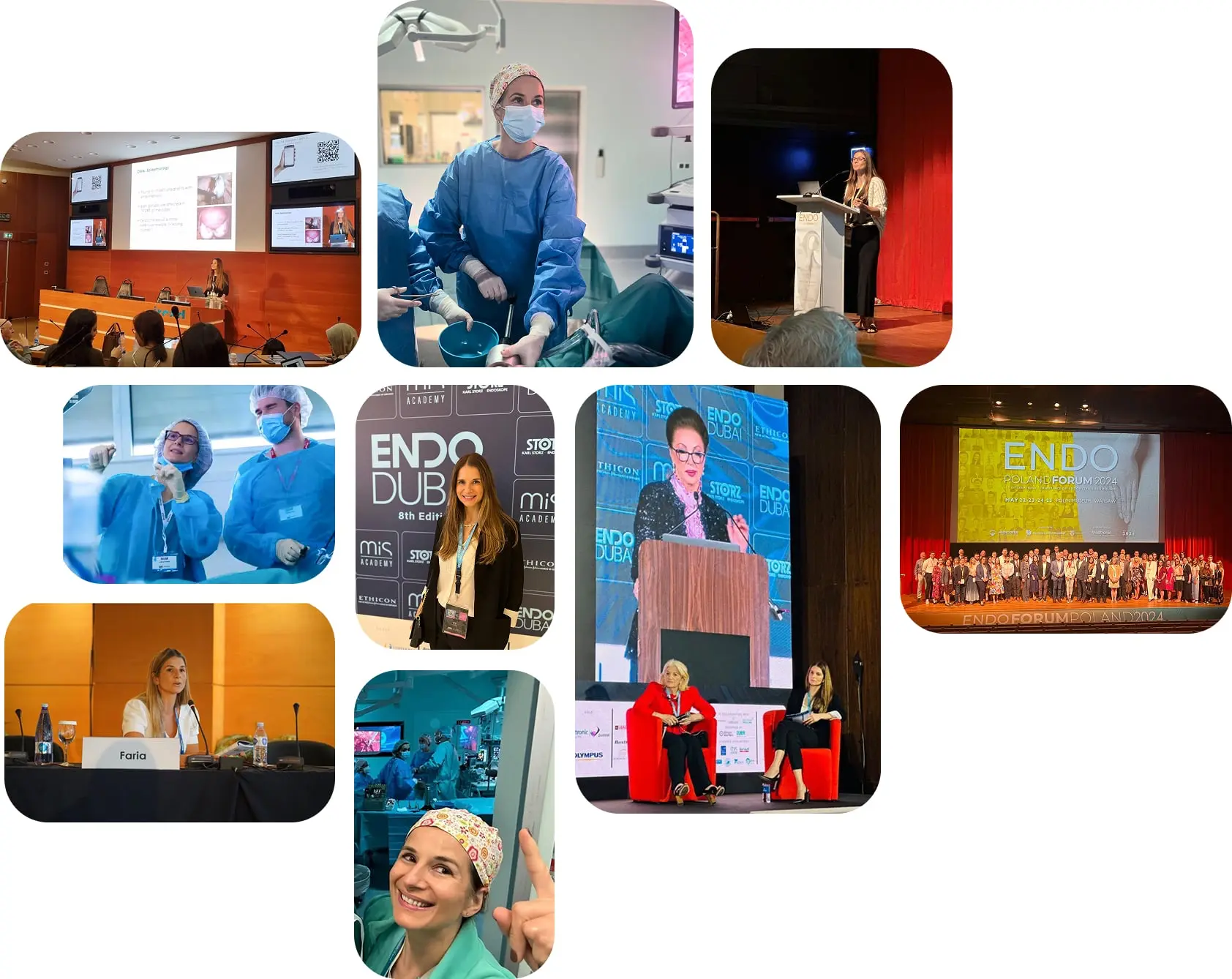
In Lisbon, Dra. Joana Faria performs and coordinates surgery for benign diseases and infertility in Portuguese, English, French, and Spanish. She favours minimally invasive techniques and works in close collaboration with fertility and pelvic pain teams.
This page focuses on surgery for benign diseases and infertility. For more detail you can also read the pages on reproductive tract diseases, myomas, uterine polyps, endometriosis, ovarian and tubal cysts and masses, hysteroscopy and laparoscopy.
What it is
Benign gynecologic surgery and infertility surgery aim to correct problems that are not cancer but still have a strong impact on quality of life or on the ability to conceive. Typical indications include:
- Fibroids that cause heavy bleeding, pain or distortion of the uterine cavity.
- Uterine polyps that may cause irregular bleeding or reduce the chance of embryo implantation.
- Endometriosis affecting the ovaries, ligaments or peritoneum.
- Adhesions, tubal disease or hydrosalpinx that may block the passage of the egg.
- Ovarian cysts and benign masses that are painful, persistent or suspicious.
These procedures can be hysteroscopic (inside the uterus), laparoscopic (through small abdominal incisions) or conventional (through a vaginal or abdominal approach), depending on the type and extent of the disease.
Main symptoms and when to worry
Surgery for benign disease and infertility is usually considered when symptoms are frequent or severe, or when structural problems clearly interfere with fertility. Common situations are:
- Very heavy or prolonged menstrual bleeding that causes anemia or limits your daily life.
- Painful periods or chronic pelvic pain that do not improve enough with medicines.
- Intermenstrual bleeding or spotting that persists despite medical treatment.
- Known fibroids, polyps, endometriosis or cysts that are growing or changing on ultrasound or MRI.
- Infertility that may be related to fibroids, polyps, adhesions, tubal disease or endometriosis.
You should consider a surgical consultation if you have been offered medication but remain unwell, if exams repeatedly show the same lesions without improvement or if fertility investigations suggest a structural cause that could be corrected.
You should seek urgent care if you have sudden intense abdominal pain, pain with fever and malaise or very heavy bleeding with dizziness or fainting. These signs can indicate emergencies such as torsion, rupture or infection and must be evaluated quickly.
Diagnosis: exams and what to expect
Before proposing surgery, a detailed evaluation is essential. The aim is to understand your symptoms, confirm that surgery is really indicated and plan the most appropriate technique.
The assessment usually includes:
- Clinical history
Discussion about your cycle, pregnancies, miscarriages, previous surgeries, medicine use, family history and fertility plans. This helps to prioritise what is most important for you right now. - Gynecologic examination
Evaluation of the vulva, vagina and cervix and bimanual palpation of the uterus and ovaries. The doctor may feel fibroids, pain points or limited mobility that suggest adhesions or endometriosis. - Transvaginal ultrasound
Key exam to characterise fibroids, polyps, ovarian cysts and signs of deep endometriosis. In infertility, ultrasound also evaluates the uterine cavity and endometrium. - Additional imaging
Depending on the situation, saline infusion sonography, hysterosalpingography, pelvic MRI or other exams may be recommended to better define tubal patency, adhesions or the relationship between lesions and neighbouring organs. - Laboratory tests
Blood tests can include haemoglobin, iron, coagulation, hormones and, when needed, tumour markers.
Once this information is gathered, Dra. Joana Faria explains the findings in clear language and discusses whether surgery is likely to improve symptoms or fertility, or whether medical treatment and monitoring may be enough.
Treatment options and realistic expectations
Treatment for benign diseases and infertility is rarely limited to a single intervention. It often combines lifestyle measures, medicines, surgery and fertility techniques in different sequences over time.
Main paths include:
- Medical treatment alone
For some women, hormonal treatment and pain management provide adequate control of symptoms. In these cases, surgery can be postponed or avoided as long as exams remain stable and fertility is not a priority. - Targeted hysteroscopic surgery
Removal of polyps or submucous fibroids from inside the uterus can reduce bleeding and improve implantation in women trying to conceive. Recovery is usually quick and many patients go home on the same day. - Laparoscopic surgery for benign disease
Laparoscopy allows treatment of fibroids, endometriosis, adhesions and ovarian cysts with smaller incisions, less pain and faster recovery compared with open surgery. It is often used when infertility is related to pelvic factors. - Conventional surgery when needed
Open abdominal surgery or vaginal surgery may be safer for very large fibroids, complex adhesions or when the anatomy is significantly distorted. Although recovery is longer, in some cases this is the most effective and secure option. - Integration with fertility treatment
Surgery can be combined with timed intercourse, ovulation induction or assisted reproduction. The timing and type of fertility treatment depend on age, ovarian reserve, semen parameters and how urgent it is to achieve a pregnancy.
Realistic expectations are crucial. Surgery can substantially improve pain, bleeding and chances of pregnancy in selected situations, but it does not guarantee a pregnancy or completely symptom free life for everyone. Some conditions, such as endometriosis or fibroids, can recur over time and may need further monitoring or treatment.
How Dra. Joana Faria approaches surgery for benign disease and infertility
Dra. Joana Faria believes that surgery for benign disease and infertility should be carefully planned and never rushed. Her approach is centred on your story, your values and your reproductive plans.
In daily practice she:
- Takes time to explore how symptoms and infertility affect your work, relationships and emotional wellbeing.
- Explains the anatomy and the proposed surgery in simple language, often using drawings or images of your own exams.
- Favours conservative and fertility sparing techniques whenever possible, preserving the uterus and ovaries when they are healthy.
- Works in close collaboration with fertility, anesthesia and pelvic pain teams to build a coherent plan instead of isolated procedures.
- Gives clear, written instructions about preparation, recovery and warning signs that should prompt contact or urgent evaluation.
The aim is that you feel informed and supported, with a realistic understanding of what surgery can and cannot do, and with space to ask all your questions before deciding.