Minimally invasive gynecologic surgery uses small instruments and cameras to treat problems of the uterus, ovaries, tubes and pelvic cavity. The aim is to correct the disease with less pain, smaller scars and a faster recovery than with traditional open surgery.
Two main techniques are used. Hysteroscopy treats problems inside the uterine cavity through the cervix, without abdominal cuts. Laparoscopy treats conditions in the pelvis through small incisions in the abdomen, using a camera and fine instruments.
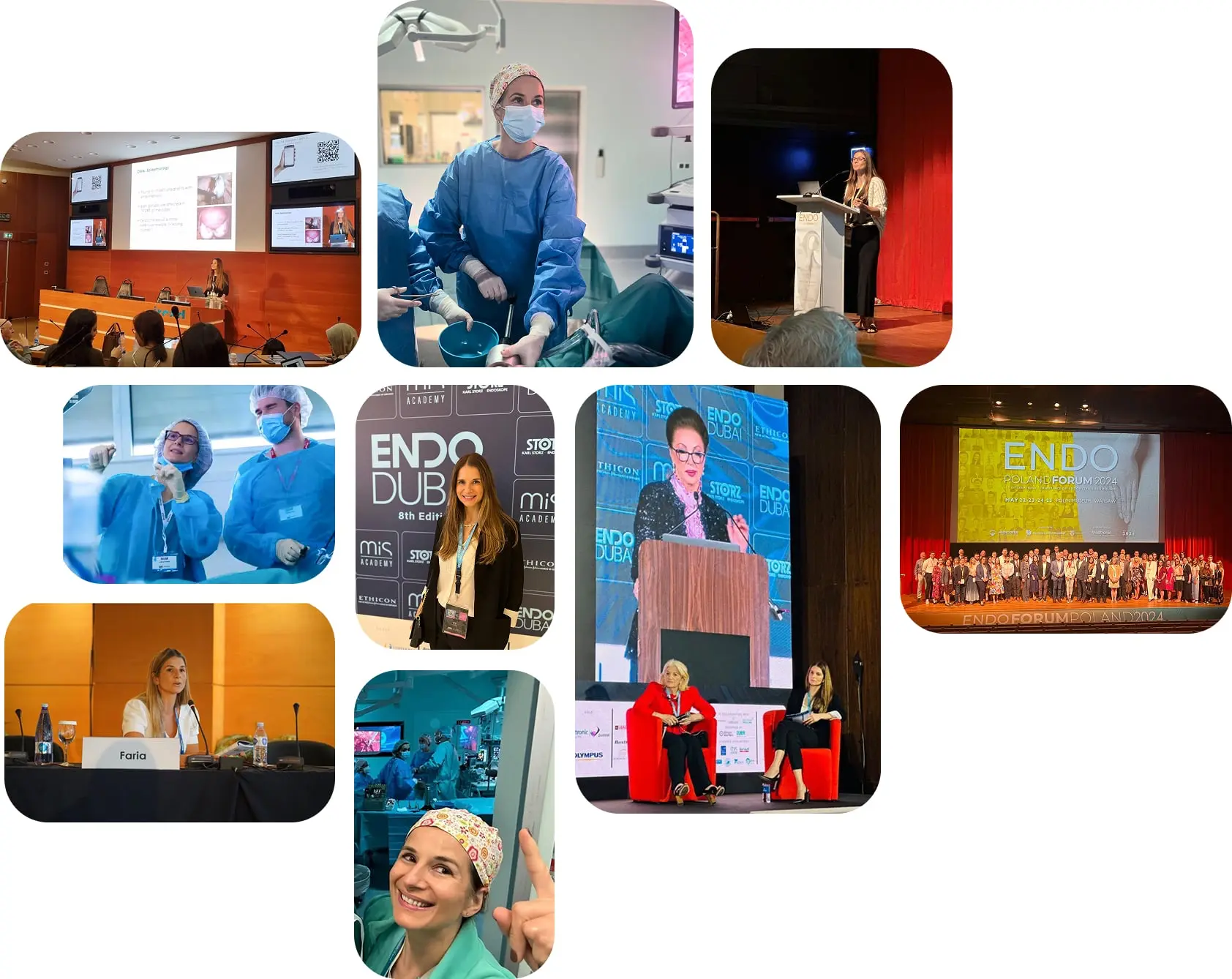
In Lisbon, Dra. Joana Faria performs and coordinates minimally invasive gynecologic surgery for benign diseases and infertility in Portuguese, English, French, and Spanish. Her focus is on safety, precision and clear communication before and after surgery.
This page gives an overview of minimally invasive gynecologic surgery. For more detail you can also read the pages on hysteroscopy and laparoscopy, as well as the page on benign diseases and infertility surgery.
What it is
Minimally invasive gynecologic surgery includes procedures that use natural passages or small incisions to access the pelvic organs. The most common are:
- Diagnostic hysteroscopy inspection of the uterine cavity with a thin telescope through the cervix.
- Operative hysteroscopy removal or treatment of polyps, submucous fibroids, adhesions or malformations inside the uterus.
- Diagnostic laparoscopy visualization of the pelvis through a camera introduced at the ombilicus.
- Operative laparoscopy treatment of conditions such as endometriosis, fibroids, adhesions, ovarian cysts and tubal disease.
Compared with conventional open surgery, minimally invasive techniques usually mean less pain after the operation, shorter hospital stays, faster return to normal activities and smaller scars. They also offer good visualization of the pelvic anatomy, which helps in complex procedures.
Main symptoms and when to worry
Minimally invasive surgery is not a treatment in itself. It is a way to perform the procedures needed to treat specific conditions. Typical symptoms that may lead to an indication for hysteroscopy or laparoscopy include:
- Very heavy or irregular menstrual bleeding that does not improve with medical treatment.
- Infertility, especially when polyps, fibroids, adhesions or tubal disease are suspected.
- Painful periods or chronic pelvic pain that raise the suspicion of endometriosis or adhesions.
- Ovarian cysts or pelvic masses that are persistent, symptomatic or suspicious on imaging.
You should seek a gynecologic opinion if you have significant pain, bleeding or difficulties in conceiving and previous medical treatment has not brought enough relief. In consultation, the doctor will assess whether minimally invasive surgery could help in your situation.
You should seek urgent care if you have sudden intense abdominal pain, pain with fever and malaise or very heavy bleeding with dizziness or fainting. These can be signs of emergencies such as torsion, rupture or infection that may require prompt surgery.
Diagnosis: exams and what to expect before surgery
Before minimally invasive surgery is proposed, it is important to confirm that the indication is clear and that the benefits outweigh the risks. This requires a careful preoperative assessment.
The evaluation usually includes:
- Clinical history and examination
Discussion of symptoms, previous treatments, surgeries, medical conditions and medicines. Gynecologic examination helps to understand the size and position of the uterus, ovaries and any palpable masses. - Transvaginal ultrasound
Key exam to evaluate fibroids, polyps, ovarian cysts, endometriosis and the uterine cavity. In some cases, saline infusion sonography is used to better outline the inside of the uterus. - Additional imaging
Pelvic MRI, hysterosalpingography or other exams may be requested to detail tubal patency, deep endometriosis or adhesions. - Laboratory tests
Blood tests assess anemia, clotting, kidney and liver function and, when needed, tumour markers or hormonal profile. - Anesthesia consultation
For procedures under general anesthesia, you meet the anesthesiologist who reviews your health, explains the type of anesthesia and answers questions about pain control.
During this phase you receive clear instructions about fasting, medicines to stop or adjust and what to bring on the day of surgery. You also receive practical information about hospital admission and expected length of stay.
Treatment options and realistic expectations
Minimally invasive surgery is one of several options for treating benign gynecologic disease and infertility. It is often combined with medication before or after the procedure and, when relevant, with fertility treatment.
Main options include:
- Medical treatment only
For some women, hormonal treatment and pain control are sufficient to manage symptoms, and surgery can be avoided or postponed. - Hysteroscopic surgery
Removes lesions inside the uterus such as polyps, submucous fibroids or adhesions. Recovery is usually quick and many patients go home the same day. - Laparoscopic surgery
Treats endometriosis, fibroids, adhesions, ovarian cysts and tubal disease through small incisions. Most women experience less postoperative pain and return to work and daily activities earlier than after open surgery. - Conventional surgery
In some situations, such as very large fibroids or complex adhesions, open abdominal or vaginal surgery may be safer or more effective. In these cases, minimally invasive techniques may not be the best choice.
Realistic expectations are important. Minimally invasive surgery can significantly reduce pain and bleeding and improve fertility in selected cases, but it does not guarantee a perfect cycle or a pregnancy for every woman. Like any surgery, it carries risks such as bleeding, infection, injury to nearby organs and, rarely, the need to convert to open surgery.
How Dra. Joana Faria approaches minimally invasive surgery
Dra. Joana Faria is expert in minimally invasive surgery (MIS) and sees it as a tool that must be adapted to each woman, not as a goal in itself. Her priority is to offer the safest and most effective approach for your specific situation.
In practice she:
- Starts from your symptoms, expectations and fertility plans, not just from imaging results.
- Explains clearly why hysteroscopy, laparoscopy or conventional surgery is recommended, and what each option involves.
- Uses minimally invasive techniques whenever they are safe and appropriate, and discusses openly the situations in which open surgery is preferable.
- Works with experienced anesthesiologists and surgical teams to reduce risks and improve comfort.
- Provides detailed written instructions for preparation and recovery, including when you can drive, work, exercise and resume sexual activity.
The goal is that you feel informed, respected and supported at every step of the process, from the first consultation to the postoperative follow up.